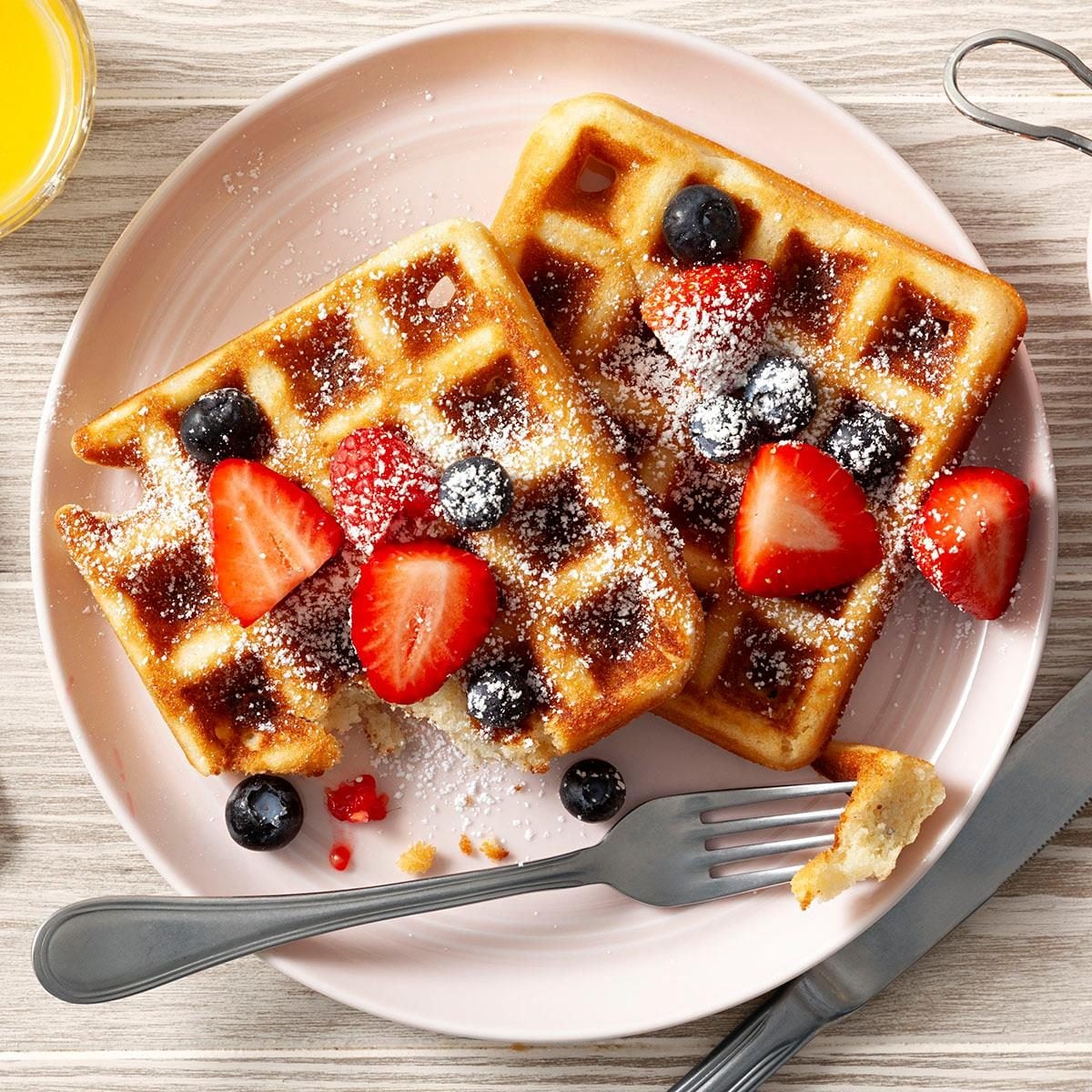
Bake Heavenly Belgian Waffles: Fluffy Inside, Crispy Outside
Imagine waking up to the irresistible aroma of freshly baked waffles, golden-brown and steaming hot, their deep pockets ready to cradle a pool of syrup and a dollop of whipped cream. This isn't just a breakfast fantasy; it's the reality of homemade
Belgian waffles. Forget those flimsy, flat imitations – we're talking about the real deal: magnificent, airy creations that boast a remarkable contrast of textures. A delicate, cloud-like interior encased in a gloriously crisp, golden shell. Achieving this perfect balance might seem like a closely guarded secret, but with the right techniques and a touch of culinary know-how, you can master the art of baking truly heavenly
Belgian waffles right in your own kitchen. Prepare to transform your weekend mornings into a gourmet experience that will have everyone asking for more.
The Hallmarks of Authentic Belgian Waffles
What truly sets
Belgian waffles apart from their thinner, denser counterparts? It's more than just their iconic grid pattern. Authentic
Belgian waffles are renowned for their substantial thickness and deeper, larger pockets, which are designed to capture and hold generous amounts of toppings – a key characteristic that enhances every bite. But the magic extends beyond their appearance. These waffles are a symphony of textures and flavors. On the outside, they achieve an almost ethereal crispness, a satisfying crunch that gives way to an interior that is remarkably light, fluffy, and tender.
Unlike many standard waffle recipes that rely solely on baking powder, traditional
Belgian waffles often incorporate yeast for leavening, contributing to their signature airy texture and subtle tangy flavor. However, for those seeking a quicker path to perfection without the overnight proofing, a clever combination of baking powder and whipped egg whites delivers a similarly spectacular result. This method provides an incredible lift and delicate structure, ensuring your waffles are not just thick, but genuinely light as a feather inside. The flavor profile is typically delicately sweet, allowing them to be dressed up with anything from fresh fruit and powdered sugar to more decadent chocolate sauces and ice cream. This versatility makes
Belgian waffles a beloved choice for breakfast, brunch, or even a delightful dessert.
The Science Behind the Fluff and Crisp
The pursuit of the perfect
Belgian waffle isn't just about following a recipe; it's about understanding the science that transforms simple ingredients into culinary masterpieces. The contrasting textures – the delicate interior and the crisp exterior – are a direct result of thoughtful ingredient choices and precise techniques.
The primary secret to their incredible lightness lies in leavening. While yeast provides a deep, complex flavor and airy structure over a longer fermentation period, modern, accessible
Belgian waffle recipes often leverage the power of baking powder and whipped egg whites. Baking powder acts as a chemical leavening agent, releasing carbon dioxide bubbles when mixed with liquid and exposed to heat, causing the batter to rise. This creates a tender, open crumb.
However, it's the addition of
whipped egg whites that truly elevates the texture. When egg whites are beaten to stiff peaks, they incorporate a tremendous amount of air. Gently folding these aerated whites into the batter introduces a mechanical leavening, creating countless tiny air pockets that expand during cooking. This process is essential for achieving that characteristic "light as a feather" internal structure that defines a great
Belgian waffle. The protein structure of the egg whites helps stabilize these air bubbles, preventing them from collapsing and contributing to the waffle's remarkable fluffiness.
But what about the crispness? This is where the waffle iron and fat play their roles. A good amount of fat, like vegetable oil or melted butter, in the batter contributes to tenderness and helps create a crispy crust. As the waffle cooks on a very hot iron, moisture on the surface rapidly evaporates, and the sugars and proteins undergo the Maillard reaction, resulting in that desirable golden-brown color and satisfying crunch. The fat then crisps up the outer layer, preventing it from becoming soggy and lending an irresistible crackle with every bite. Understanding these principles is key to consistently baking exceptional
Belgian waffles.
Crafting Your Heavenly Belgian Waffles: A Step-by-Step Guide
Ready to bring the magic of homemade
Belgian waffles to your table? This recipe balances simplicity with sophistication, ensuring a divine outcome every time. Our chosen method utilizes baking powder and whipped egg whites for that signature light and crisp texture without the wait.
Ingredients:
- 2 cups all-purpose flour
- 4 teaspoons baking powder (ensure it's fresh for optimal lift!)
- ½ teaspoon salt
- ¼ cup granulated sugar
- 2 large eggs, separated
- ½ cup vegetable oil (or melted unsalted butter for richer flavor)
- 2 cups whole milk
- 1 teaspoon pure vanilla extract
- Additional oil or cooking spray for the waffle iron
Preparation Method:
- Prepare Your Workspace: Begin by gathering all your ingredients and ensuring they are at room temperature. This helps them combine more smoothly. Preheat your Belgian waffle iron to medium-high heat according to the manufacturer's instructions. A super-hot iron is critical for crispness and preventing sticking, as we'll discuss in more detail later.
- Sift the Dry Ingredients: In a large mixing bowl, combine the flour, baking powder, salt, and sugar. Sifting these ingredients together isn't just about removing lumps; it also aerates the dry components, contributing to a lighter batter and more even distribution of the leavening agent. Whisk them thoroughly to ensure everything is well-combined.
- Whip the Egg Whites: In a separate, impeccably clean, medium-sized bowl (even a trace of fat can prevent the whites from stiffening), carefully separate the egg whites from the yolks. Using an electric mixer, beat the egg whites on medium speed until soft peaks form, then increase the speed to high and continue beating until stiff, glossy peaks appear. The whites should hold their shape firmly when the beaters are lifted. Set aside.
- Combine Wet Ingredients: In another bowl, whisk together the egg yolks, milk, vegetable oil (or melted butter), and vanilla extract until well-blended.
- Combine Wet and Dry: Pour the wet ingredient mixture into the bowl with the dry ingredients. Mix with a whisk or spatula just until *barely* combined. A few lumps are perfectly fine; in fact, they're preferred! Overmixing develops gluten in the flour, which can lead to tough waffles instead of tender ones.
- Fold in the Egg Whites: This is a delicate but crucial step. Gently fold about a third of the whipped egg whites into the waffle batter to lighten it. Then, add the remaining egg whites and fold them in carefully using a spatula, employing an upward motion to incorporate the air. Stop as soon as no streaks of white remain. The batter will be thick, light, and airy.
- Cook Your Waffles: Lightly oil or spray your preheated waffle iron. Ladle the batter into the hot iron, making sure to fill the wells completely but without overfilling. This ensures crisp edges can develop. Close the lid and cook for approximately 5-10 minutes, or until the waffle is deep golden brown and the steam almost completely stops. The exact time will vary depending on your waffle iron's wattage and specific settings.
- Serve Immediately: Carefully remove the cooked Belgian waffles from the iron using a fork or tongs. Serve them hot, adorned with your favorite toppings. For multiple batches, you can keep cooked waffles warm by placing them directly on an oven rack in a single layer in a preheated oven at 200°F (95°C) while you finish cooking the rest.
Mastering Your Waffle Iron: Tips for Perfection
Your waffle iron is more than just an appliance; it's a critical tool in achieving the ideal
Belgian waffle. Understanding how to use it effectively can make all the difference between a good waffle and an unforgettable one.
The most paramount tip, often overlooked, is
preheating. Your waffle iron must be *very hot* before the first dollop of batter touches its surface. Why? A hot iron immediately sets the exterior of the waffle, allowing steam to build rapidly inside, which helps to create the fluffy interior. This initial high heat also kickstarts the Maillard reaction, resulting in that coveted golden-brown, crispy crust. If your iron isn't hot enough, the waffle will absorb oil, stick, and likely turn out soft and pale rather than crisp. Wait for the indicator light, if your iron has one, or give it at least 10-15 minutes to reach optimal temperature.
Next, consider the amount of batter. The reference context clearly states the importance of "completely fill[ing] the wells." This isn't just for aesthetics; it's essential for structural integrity and crispness. When the batter makes full contact with all the grooves and edges of the iron, it allows the entire surface area to cook evenly and crisp up. Underfilling can lead to soft, underdeveloped edges, while overfilling creates messy overflow. With a little practice, you'll find the perfect amount for your specific waffle maker.
Cooking time is another crucial factor. While 5-10 minutes is a general guideline, rely more on visual cues and the steam output. True
Belgian waffles should be cooked until they are a rich, uniform golden brown. Don't be tempted to remove them too soon, even if they look "done." The longer they cook (without burning, of course), the crispier they will become as more moisture evaporates. A good sign they're nearing perfection is when the steam emanating from the iron significantly diminishes, indicating that most of the internal moisture has been cooked out. Avoid peeking too early, as this can interrupt the cooking process and prevent the waffle from crisping properly.
Finally, proper greasing of the waffle iron is essential, particularly if your iron isn't non-stick or if you're making a large batch. A light coat of vegetable oil, melted butter, or cooking spray applied before the first waffle and occasionally between batches will prevent sticking and contribute to a beautiful, even crust. For more specific insights on achieving the best results with your iron, check out our guide on
Achieve Perfect Fluffy & Crisp Belgian Waffles: Top Cooking Secrets.
Indulge in Homemade Belgian Waffle Perfection
There's an unparalleled joy in creating something truly delicious from scratch, and homemade
Belgian waffles are no exception. Far surpassing any frozen alternative, these magnificent creations deliver on every promise: a shatteringly crisp exterior yielding to an interior that's light as a cloud. By understanding the simple science behind leavening with baking powder and whipped egg whites, and mastering the crucial steps of preheating your waffle iron and properly filling the wells, you're well on your way to breakfast nirvana. So, gather your ingredients, fire up your waffle iron, and prepare to fill your kitchen with the heavenly scent of fresh
Belgian waffles. The ultimate fluffy, crispy delight awaits – a perfect start to any day, and a treat that will undoubtedly become a cherished tradition in your home.